


6/10 - Dodie Music Video
- Lianne Yu

- Jan 22, 2021
- 8 min read






Pre-production
For logistical research, I had to make sure all our filming locations are accessible, free to use (because of low budget), and suitable for our music video (settings, colours etc). At the beginning we planned to use Waterloo station for the first half of our music video, however, after looking into it, the permissions were not easily granted and it was too expensive. Therefore we made do with Kingston station instead, and the end result was good, and successfully maintained our original concept. Recruiting an actor was challenging, most of the people I have contacted were either reluctant to be on camera or had a busy schedule and were not available. As a last minute solution, we had one of our group members act since she fits with my character description, and to our advantage she was familiar to the music video concepts and the production/filming process, which made the filming go even more smoothly and in turn saved us time.
My specific role in pre-production as an act director and lighting person was completing character development, continuity sheet, location recces, location release forms, risk assessments, lighting mood board, and booking/collecting lighting equipment. There were several restrictions and issues whilst completing the above, for example, for the character development, I had to make sure that it was as realistic as possible, so that my actor can relate to a certain degree and perform better when acting in the music video. This could make sure that the audience understands the story of our protagonist and therefore make the video more personally identifiable, which is important and determines the success of a media product according to the uses and gratifications theory. Booking the lighting equipment also had its own restrictions, since there were a lot of groups filming during our week of filming, I had to book the equipment weeks earlier to make sure filming goes smoothly, however even doing so there was a day when the LED lighting panel I needed was unavailable, so as a solution the group swapped filming dates and we still managed to complete our filming with appropriate lighting needed.
My group had to have several production meetings prior to filming, all of the group members were responsible for coming to all the meetings on time and contributing to them. As art director, my role was to have all my ideas, information and paperwork ready before the meetings so I can pitch it to the group and gain feedback, improve those after the meeting so that the whole group can come to a good conclusion where we are all happy with the ideas/filing methods etc. This is important as disagreements within the group can heavily disrupt our filming process and slow down everything in our tight schedule.
After our production meetings, our planning did change because of my logistical research, we had to move our filming location and dates because of budget and permission issues. An example of this is that we had to move from filming at Waterloo station to Kingston station, because of 1) using Waterloo station required an expensive fee; 2) it will be way too busy and crowded.
Looking back, I think I did plan the production in good detail. Our two days of filming went smoothly and we did not run into major problems during it. The issues and restrictions I had during pre-production were all successfully fixed and the parts of production where we needed an alternative (location, actor) turned out well.
Production/filming
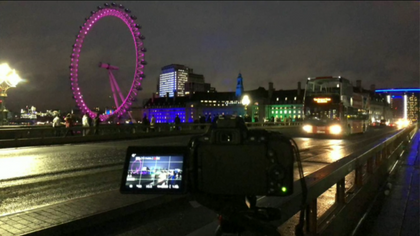
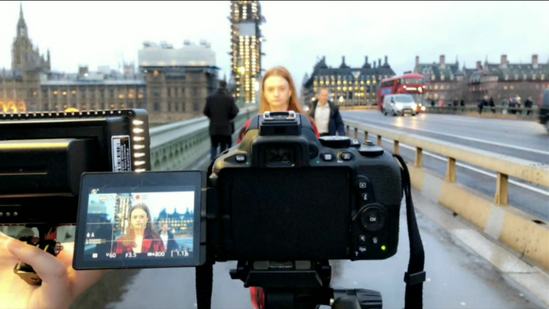
Our group organised the filming through our production meetings. Filming took place over the course of two days, and the limited days/time meant that we had to be extremely efficient and productive. During day two of filming, we were on location at London Oxford street, trying to get footage of the signature red London buses. However, due to traffic, the shots turned out way too cluttered and not what we expected. As an attempt to solve this, we moved to the back streets where it was less busy and got shots there instead, this did improve how the shots looked but we didn’t manage to capture a lot of the red buses we needed for the video. In terms of successes, the filming that took place on the Westminster Bridge went really smoothly and we did manage to get loads of aesthetically fitting shots for our music video, for example, time lapses of the public, shots of the London Eye, nighttime city landscape, and parliament buildings. Overall, we did follow our original plan during filming. The only thing we changed last minute was that we swapped the two filming dates around, so instead of filming in central London on the first day, we decided to film all the bedroom/indoor scenes first, this is due to bad weather. My role in the filming process was art direction and lighting. I had to make sure the shots were the right colour scheme, the background looked aesthetically fitting for our video, and how to improve them if not. I was also responsible for lighting any areas needed within the frame. I had to determine whether to use white or orange lighting depending on what natural lighting was available in that particular space. A problem I encountered whilst using the LED panel was that because of the locations of our shots (lots of mirrors and windows), the light was often visible in the reflection and ruins the shot. I had to constantly find new spots for me to place the light so the audience cannot see it in frame. The group worked together well, there were constructive criticisms which meant that we weren’t just agreeing with each other blindly and actually helped improve the music video. Time management is arguably the most important part for group projects, and during this production all three group members were on time, met the deadlines and delivered good performances. This helped save us time and therefore had more time to perfect our work afterwards.
Post-production
When looking at my rushers, I had over 200 clips which is a good amount for editing. During shot logging, I organised all my footage into what is usable and what isn’t. The group concluded that we did not need to re-shoot as we have all the footage needed for the music video, all of which follows the storyboard and original idea. The group managed each stage of the edit process individually, each member used the same rushers but started our own rough edit. During my editing process, I aimed to cut to the beat, so that each scene matches the lyrics of the song, and the narrative can come off as clearly as possible. I also colour graded all of my clips to achieve that warm colour palette, fitting to the aesthetic and feel of the music video. For my own edit, I used a lot of slow motion and time lapses, not only do they create contrast, they also help signify when the climax of the song is, and when the slower more emotional parts are etc.
Evaluation of the finished product
My favourite scene and shots out of the whole music video are the time lapses filmed on Westminster Bridge, the city lights out of focus in the background in contrast with our actor in the foreground in focus creates the dreamy and soft aesthetic we intended for this video. The colours in the shots (warm orange city lights, her red coat) also goes well with the colour palette of the music video in general. Another shot I am pleased with is the shot of our protagonist on the train, she is sitting by the window seat and we made use of the reflections, found a good composition and created a really nice looking shot. Looking back at the proposal/pitch, the finished music video ended up fitting most of the criteria, including cinematography, lighting, mise-en-scene and editing. The only thing different is that in the original pitch, we wanted more tracking/moving shots, but in the finished product there are more stable and stationary shots. The communication with our audience was successful, during the screening, we got feedback from our tutors and peers that they were invested in the story, felt sympathetic to the character, and wanted to know everything about her, trying to pick up any hints in the video. The main constraint we experienced was something out of our control - bad weather. The rain ruined our chances of filming a sunset that was important to the video, so we had to make do with the LED lighting panel, as well as colour grading in post-production, which added an orange tint to the shots. In my next project, I aim to be more creative and free with the filming process, even though we did film everything in our storyboard and shot list, I stayed within my comfort zone and did not try to experiment with different things (camera angles, movements, different settings available etc). Therefore, I think stepping out of the box and having more creative freedom would really benefit both myself and the finished product, making it more unique (a better USP) and stand out from the others.
The final analysis
After this project, I have developed and improved both my technical and planning skills, for example, I have a better idea of how lighting, particularly LED panels work, and how to make the most out of them. I have also learnt to be more flexible with my time and schedule as there are a lot of unexpected things that could happen, especially during filming days, being adaptable and solving problems are crucial and useful skills for me to have. In terms of my next project, I intend to improve my work visually and creatively by conducting more research of the relevant subject beforehand, as seeing and analyzing other people’s work really helps me with gaining inspiration. When it comes to working with a group, I completed all the work necessary for my role on time, and worked well with my peers, communication was clear from start to finish and I feel we completed the work together with good joint effort. After this production, my skills mainly lie in the artistic and aesthetic side of filming, for example colour palettes, tone and feel of the video, props, makeup, and costumes, therefore I will do my best to bring those skills to the group and improve the piece next time.
Marketing and longevity
For our music video, there were a few things we added for the purpose of better marketing. This is important as it helps the video gain a larger audience and exposure, therefore have the potential of making more money. Social and cultural context is used in this video, with references to the theme of mental health awareness such as anxiety and depression in today’s society. We used specific emotive codes and conventions such as visual codes (colour palettes, dress codes, gestures codes and expressions) and technical codes (camera shots, lighting, editing, digital manipulations). A few examples of those include: the actor’s outfit being all black with a striking red coat - meaning that she is sad and anxious on the inside, but has to put on a front of being alert and cautious on the outside. A warm colour palette is used to connote hope, progress, and most importantly have the audience feel sympathy for our protagonist, root for her and be on her side. Our character’s gestures and facial expressions are heavily featured in our video. This creates a personal story following her journey not only physically, but mentally as well. Going from gloomy and sad at first to a slight happiness and relief at the end. All of these above creates meanings in conjunction with the lyrics, especially for our target audience which is young people, giving them a character that they can personally relate to. Audience will feel represented, and the direct mode of address will make them feel personally addressed, therefore they are highly likely to return to the music video and rewatch it. Furthermore, these hints we put in the music video may become a watercooler topic, where the audience will talk amongst their social group, trying to decode the meanings of lyrics and the music video visuals to piece together the narrative. As a result this will help promote the song, increase its sales, help the artist gain exposure and prolong the ‘life’ of the song.
Comments